
Views: 0 Author: Site Editor Publish Time: 2026-10-28 Origin: Site


Modern open-plan designs look breathtaking. However, they often sound terrible. Hard surfaces like exposed concrete ceilings, glass partition walls, and polished hardwood floors create annoying echoes. This severe noise pollution ruins the occupant experience. Enter the ultimate intersection of sustainable design and modern aesthetics. We are talking about PET felt acoustic solutions.
In this comprehensive guide, we will explore how these innovative materials solve contemporary acoustic problems. You will learn about their underlying mechanics and discover their vast design versatility. Most importantly, we will show you how to choose the ideal thickness and specifications for your specific commercial or residential project.
Eco-Friendly Composition: These sound-absorbing solutions are manufactured from recycled plastics, specifically polyethylene terephthalate. This drastically reduces environmental impact.
Superior Acoustic Performance: They effectively control background noise and reduce reverberation times in highly reflective modern environments.
High Design Versatility: Available in a multitude of colors, 3D geometric shapes, and custom textures, they seamlessly integrate into any architectural vision.
Material Superiority: Compared to traditional polyurethane foam or dense cork, PET felt provides enhanced durability, better fire resistance, and superior aesthetic longevity.
Thickness Matters: Opting for thicker profiles delivers significantly improved low-frequency sound absorption for demanding acoustic spaces.
Understanding the fundamental composition and mechanics of these panels is essential. Architects and facility managers need reliable sound-dampening treatments. Let us break down the engineering behind the material.
PET stands for Polyethylene Terephthalate. It is a highly durable form of polyester commonly used in plastic water bottles. The manufacturing process of this material is a prime example of industrial upcycling. Post-consumer plastic bottles are collected, thoroughly cleaned, and shredded into flakes. Next, these flakes are melted and extruded into fine, soft fibers.
Through a specialized needle-punching and heat-bonding process, the fibers are compressed into dense, rigid, yet surprisingly lightweight felt boards. Standard architectural panels often come in dimensions like 1220x2440mm with a high density of 1900g/sqm or more. The final result is a highly durable acoustic material that contains no toxic binders or chemical hardeners.
To truly appreciate the efficacy of these treatments, we must distinguish between sound blocking—soundproofing—and sound absorbing—acoustics. Soundproofing prevents noise from traveling between rooms. This typically requires heavy, dense materials like mass-loaded vinyl. Sound absorption improves the audio clarity within a room by minimizing reflections.
When sound waves hit hard surfaces like glass or concrete, they bounce back. This creates overlapping echoes known as reverberation. The porous, fibrous structure of PET felt acoustic panels allows sound waves to penetrate the material. As the audio waves travel through the dense network of fibers, the acoustic energy creates microscopic friction. This friction converts the sound energy into trace amounts of thermal energy. By trapping these reflections, the panels significantly reduce the room Reverberation Time, eliminating harsh echoes and vastly improving speech intelligibility.
From an engineering and architectural standpoint, the demand for sustainable acoustic materials is surging. Recent market analyses reveal a massive shift in how commercial spaces handle acoustic mitigation. Industry experts note a definitive pivot away from traditional, petroleum-based foams toward recycled, circular-economy products.
This shift is largely driven by stringent commercial sustainability mandates. Certifications like LEED and WELL building standards now heavily weigh indoor environmental quality and acoustic comfort. Furthermore, the enduring architectural preference for exposed, industrial-style interiors desperately requires acoustic mitigation. As designers increasingly prioritize environmental, social, and governance goals alongside occupant well-being, polyester acoustics have transitioned from a niche alternative to an absolute industry-standard baseline for commercial interiors.
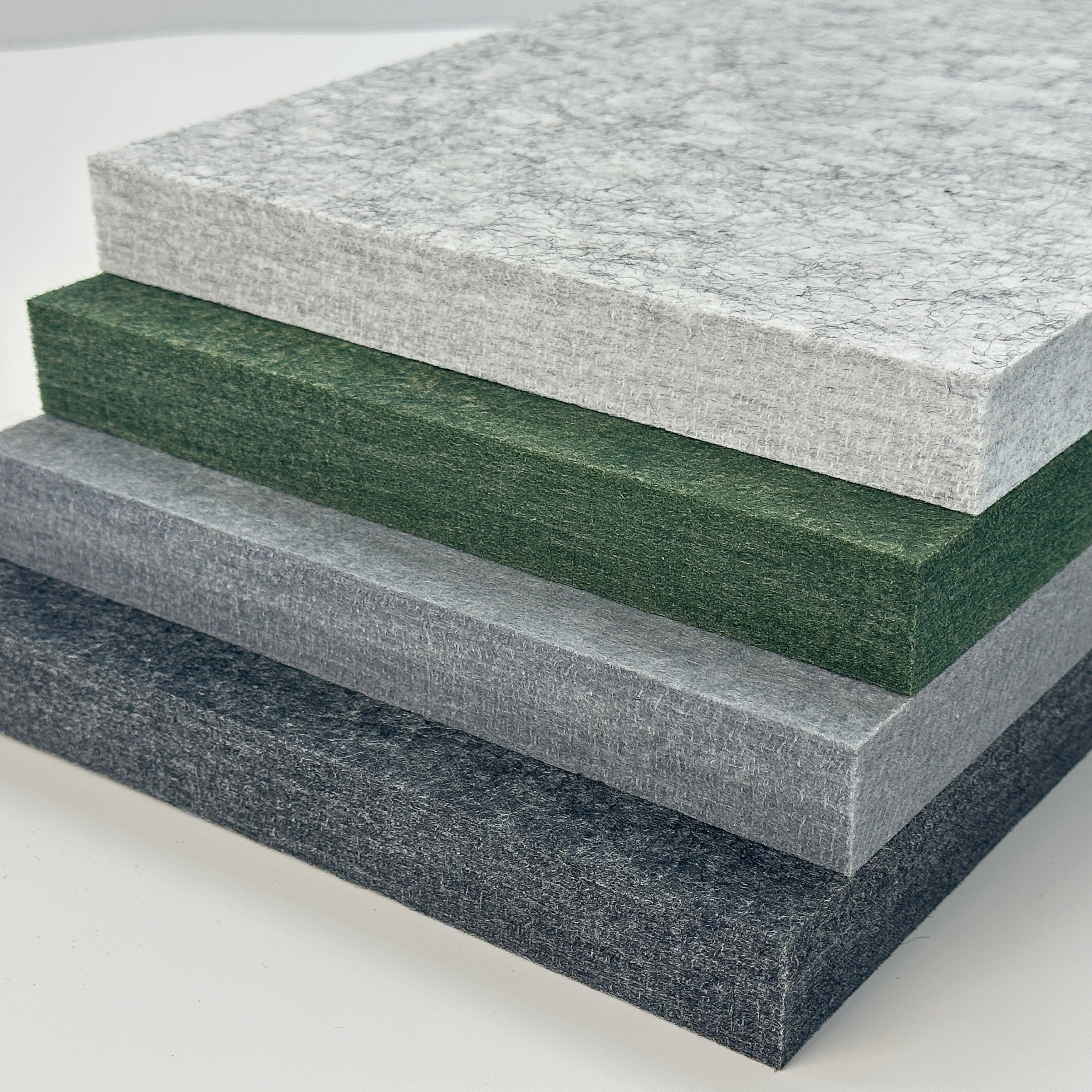
Selecting the right acoustic treatment involves balancing performance, safety, and environmental responsibility. Fortunately, modern polyester boards excel across all these critical engineering metrics.
Beyond mere aesthetics, the standout advantage of this material lies in its closed-loop lifecycle. By utilizing recycled plastics, the production of these boards actively diverts waste from oceans and landfills. Specifically, premium panels are manufactured without the use of formaldehyde or chemical adhesives. This results in exceptionally low Volatile Organic Compound emissions, ensuring safe indoor air quality and strict compliance with global environmental building standards.
Traditional sound-dampening materials often suffer from rapid physical degradation. Fiberglass panels are fragile and can release irritating particulates if punctured. Studio foam tends to crumble and discolor over time. In contrast, PET felt is highly resilient. It is naturally resistant to moisture, which actively prevents mold and mildew growth. The material is also remarkably impact-resistant. It will not dent, crack, or shatter when bumped. Imagine a busy school corridor where heavy backpacks constantly scrape the walls. This material withstands that daily abuse effortlessly.
Safety compliance is a non-negotiable factor in commercial architecture. High-quality acoustic felts undergo rigorous testing to meet strict international fire safety standards. Most premium options achieve an ASTM E84 Class A fire rating. This means they exhibit a low flame spread index and low smoke development. Consequently, they are completely safe and compliant for installation in public buildings, corporate offices, and residential properties alike.
Modern architecture demands materials that perform well without compromising visual appeal. When evaluating treatments, acoustic engineers often compare modern solutions against legacy materials. Let us look at the data to understand true long-term value.
Feature | PET Felt (e.g., 24mm) | Cork Panels | Polyurethane Foam |
|---|---|---|---|
Acoustic Performance (NRC) | High (0.85 - 1.0 with air gap) | Moderate (0.30 - 0.50) | High (0.70 - 0.90) |
Durability | Excellent. Impact and tear-resistant. | Good, but can chip or crumble. | Poor. Degrades and yellows over time. |
Eco-Friendliness | High. Made from recycled plastics. | High. Natural and renewable. | Low. Petroleum-based virgin plastic. |
Design Versatility | Vast colors, CNC cut shapes, V-grooves. | Limited to natural earthy tones. | Limited to basic wedges or egg-crates. |
Cork has long been utilized as a natural sound absorber. It offers a distinct, rustic aesthetic that works well in specific, earthy design contexts. However, its density limits its ability to absorb a wide range of sound frequencies. Polyurethane foam has been the standard for recording studios for decades. While effective at absorbing sound, it falls dramatically short in modern architectural applications due to its short lifespan and poor aesthetic appeal.
Historically, treating a room for sound forced designers to compromise on aesthetics. Modern felt eliminates this compromise entirely. It offers a blank canvas for architectural creativity.
The structural rigidity of the compressed fibers allows the material to be easily manipulated using Computer Numerical Control cutting technology. Panels can be precision-cut into intricate V-grooves, geometric 3D tiles, suspended ceiling baffles, and custom sculpted lines. This capability allows designers to add architectural depth and tactile texture to otherwise flat, monotonous walls. Instead of trying to hide acoustic treatments behind fabrics, designers can now use them as striking focal points.
Unlike painted acoustic boards where the color sits only on the fragile surface, PET fibers are dyed throughout. Because the pigment is integrated into the material itself, it will never chip, peel, or scratch off. The available color palette is vast. Corporate settings often utilize neutral tones like heather gray, charcoal, or muted navy to maintain a professional atmosphere. Conversely, creative agencies and educational spaces frequently deploy vibrant yellows, reds, and greens. These stimulate energy and serve as visual anchors in a room.
The adaptability of this product makes it an ideal solution across a wide spectrum of environments. Each space presents its own unique acoustic challenges.
The biggest complaint in modern workspaces is noise distraction. Acoustic panels reduce speech intelligibility across the room. By absorbing ambient chatter, they increase focus, productivity, and privacy for employees. In hospitality, patrons often speak louder to be heard over background noise, creating a deafening cycle. Strategically placed ceiling baffles and wall panels lower the din of clinking cutlery and overlapping conversations. Furthermore, in meeting spaces, using panels as wall cladding prevents sound from bouncing around the room. This ensures clear communication during video conferences.
Achieving professional-grade sound clarity requires precise acoustic control. Installing sound-absorbing PET felt boards captures early reflections from speakers. This ensures that movie dialogue is crisp and musical soundscapes remain accurate. With the permanent rise of remote work, creating a quiet, echo-free zone for video calls is essential. Homeowners are also increasingly using carved felt as modern art pieces. A precision-cut geometric panel can serve as a stylish, sound-absorbing headboard in a bedroom.
While standard 9mm or 12mm boards are sufficient for basic needs, demanding environments require a more robust solution. Upgrading to a thicker profile is a strategic decision for acoustic engineers dealing with complex reverberation issues.
Superior Low-Frequency Absorption
In acoustics, thickness dictates performance. Thinner profiles excel at capturing high-frequency sounds like ringing phones or sharp voices. However, they struggle with longer wavelengths. Upgrading to 24mm PET felt acoustic panels provides the necessary depth and density to trap problematic mid-to-low frequency rumbles. This includes HVAC noise, deep voices, and heavy bass frequencies.
Standalone Structural Integrity
Standard acoustic felt is relatively flexible and typically requires a rigid backing for support. In contrast, 24mm panels possess remarkable inherent rigidity. This structural integrity allows them to be utilized as freestanding desk dividers, floor screens, or suspended acoustic ceiling clouds without the need for additional supportive plywood framing.
Deep V-Groove Carving Potential
For designers looking to make a visual impact, thickness acts as a canvas. A 9mm board limits how deep a machine can cut. The extra material in a 24mm panel allows for significantly deeper, more dramatic V-groove carvings and 3D textures. This creates pronounced shadow lines that elevate the aesthetic value of the space.
Maximized NRC Ratings
The ultimate goal of any acoustic treatment is maximum sound absorption. A 24mm panel inherently provides a much higher baseline Noise Reduction Coefficient than thinner counterparts. When installed with a strategic air gap between the panel and the substrate, these premium panels can achieve an NRC rating of 0.85 to 1.0. This means they are capable of absorbing 85% to 100% of the sound energy that strikes them.
One of the most significant advantages of choosing felt-based solutions is their operational simplicity. Both installation and long-term maintenance require minimal specialized equipment.
The lightweight nature of compressed polyester fibers means that heavy-duty mounting hardware is rarely necessary. This significantly reduces labor time and costs. For permanent installations on drywall or concrete, applying a high-quality construction adhesive ensures a secure, flush fit. Simply press the panel firmly onto a dust-free wall.
For commercial spaces where panels may need to be removed or relocated, mechanical fasteners like Z-clips offer a secure but temporary mounting solution. Specifically, this method naturally creates a small air gap behind the panel, further enhancing low-frequency absorption. For lighter, smaller cuts, industrial-grade double-sided mounting tape can be highly effective.
Unlike fabric-wrapped systems that trap dust and are notoriously difficult to clean, this material is inherently moisture and dirt-resistant. Routine maintenance involves simple vacuuming using a soft brush attachment to remove surface dust. If a panel is subjected to a spill, it will not easily absorb the liquid. Spot cleaning with a damp cloth, mild soap, and warm water is usually sufficient to remove localized stains.
Selecting the appropriate acoustic treatment requires a systematic approach. Every space has a unique acoustic signature. Understanding your specific requirements guarantees optimal results. Use this engineering checklist for your next project.
Assess Your Acoustic Needs: Evaluate the volume of echo in the room. A bustling open-plan office with concrete floors will require significantly more acoustic intervention than a carpeted bedroom. A standard engineering rule of thumb is to cover 15% to 25% of the total wall and ceiling surface area.
Select the Right Thickness: Match the thickness to the specific acoustic problem. If the primary issue is general office chatter, standard 9mm panels might suffice. However, if the goal is comprehensive acoustic control, home theater optimization, or structural dividers, upgrading to premium 24mm PET felt acoustic panels is the recommended industry best practice.
Verify the NRC Rating: Always review the verified Noise Reduction Coefficient data before purchasing. Ensure the rating aligns with your goals. Check if the stated NRC was tested with or without an air gap, as this heavily influences real-world performance.
These acoustic panels are no longer just an alternative material. They are the definitive industry standard. They perfectly combine ecological responsibility with stunning visual design, all while delivering high-performance sound absorption for any room. Whether you are outfitting a bustling corporate headquarters or designing a cozy home theater, the right acoustic treatment transforms the feel of a space just as much as its sound.
Stop compromising between beautiful architecture and terrible acoustics. Upgrade your environment today by exploring premium, high-density options from YH Acoustic to achieve flawless form and exceptional function in your next project.
Yes, they are exceptionally safe for all indoor environments. The manufacturing process does not utilize toxic binders or harsh chemicals. They are hypoallergenic, completely free of formaldehyde, and emit low to zero Volatile Organic Compounds. This makes them fully compliant with strict indoor air quality standards and perfectly safe for sensitive environments like schools, hospitals, homes, and corporate offices.
No, these panels are specifically designed for sound absorption, not sound blocking. Soundproofing requires heavy, dense mass to stop sound waves from entering or leaving a room. PET felt reduces the echo and reverberation inside a room. By capturing sound reflections, they lower the overall ambient noise level, making the room feel significantly quieter, even if they do not block external noise transmission.
Yes, customization on-site is entirely possible. Thinner panels can be easily cut using a heavy-duty utility knife and a metal straight edge. It requires a steady hand and multiple passes to ensure a clean edge. However, for thicker 24mm variants, or for intricate geometric designs and precise V-grooves, factory CNC cutting is highly recommended to guarantee a flawless, professional finish.
Both locations are highly effective. The best choice depends on your specific space. Wall panels are excellent at catching horizontal sound reflections, particularly human speech in offices or living rooms. Ceiling baffles or suspended acoustic clouds are ideal for capturing ambient noise rising from large open spaces. For the most comprehensive acoustic control, a strategic combination of both wall and ceiling treatments yields the best results.
The required quantity depends heavily on the room current acoustics and primary function. A general industry rule for standard rooms is to cover 15% to 25% of the total wall and ceiling surface area. For highly reverberant spaces with concrete floors, or for critical listening environments like home theaters and recording studios, covering 30% or more of the surface area may be necessary to eliminate problematic echoes.
PET felt is incredibly durable and designed for long-term architectural use. Unlike traditional foam that degrades and crumbles within a few years, high-density PET felt maintains its structural integrity and acoustic properties for decades. It resists impact, does not fade easily, and will not break down over time.
Yes, PET felt is naturally moisture-resistant because it is made from polyester plastic fibers. It does not absorb water easily, making it highly resistant to mold and mildew growth. While they should not be submerged in water or placed in direct contact with heavy rain, they perform exceptionally well in humid environments like indoor swimming pool enclosures, bathrooms, or tropical climates.