
Views: 0 Author: Site Editor Publish Time: 2026-11-15 Origin: Site


Modern residential architecture heavily favors open-concept living spaces. Designers frequently specify hard surface finishes like polished concrete, expansive glass, and hardwood. These materials look visually stunning. However, this design trend inadvertently amplifies indoor noise pollution. Work-from-home setups and everyday household activities often transform these beautiful spaces into chaotic echo chambers. Excessive noise and poor room acoustics elevate stress levels. They diminish productivity and disrupt relaxation.
Recent architectural data reveals a distinct shift in residential design trends. Acoustic wellness is no longer an afterthought. It has become a primary design pillar. As hybrid work models stabilize, homeowners demand sustainable and visually appealing sound-dampening materials. The industry is actively moving away from industrial polyurethane foams. The market now favors eco-conscious solutions that seamlessly blend with domestic aesthetics.
Enter the PET felt acoustic panel. This practical intervention merges high-performance sound absorption with contemporary interior design. We will break down the engineering mechanics behind these sound-dampening materials. You will understand why they represent an optimal choice for residential applications and how to select the right specifications for your space.
Exceptional Noise Reduction: These acoustic treatments effectively absorb mid-to-high frequency sounds. They eliminate harsh echoes and noticeably reduce overall room reverberation.
Eco-Friendly Engineering: Manufacturers produce these panels from recycled plastic bottles. The final product is sustainable, non-toxic, and completely free from harmful chemical binders.
Design Versatility: Panels are available in a diverse array of colors, geometric shapes, and structural forms. They enhance interior decor rather than detracting from it.
Multi-Functional Comfort: Beyond mitigating noise, they offer slight thermal insulation. They drastically improve focus for remote work and elevate home entertainment experiences.
Straightforward Installation: Lightweight and structurally durable, these fixtures provide a DIY-friendly acoustic upgrade for residential spaces.
To truly grasp the efficacy of these sound-absorbing materials, we must look at their composition. PET stands for Polyethylene Terephthalate. This is a highly durable and recyclable thermoplastic polymer commonly used to manufacture clear water bottles. The production process involves sophisticated, eco-conscious recycling. Facilities sanitize post-consumer plastic bottles, shred them into microscopic flakes, and melt them down. Extruders then spin this molten plastic into fine, resilient fibers.
Engineers utilize a specialized needle-punching and heat-pressing technique next. This process compresses the soft fibers into dense, porous sheets. The resulting non-woven felt contains millions of microscopic air pockets. Utilizing PET felt diverts massive volumes of plastic waste from landfills and oceans. This establishes the material as a cornerstone of sustainable interior architecture.
Physically, the material is uniquely suited for living spaces. It is lightweight, highly impact-resistant, and entirely odorless. Unlike older acoustic materials, it does not degrade, crumble, or release irritating particulate matter into the air over time. Visually, PET felt offers a clean, matte finish. It mimics the warmth of natural wool textiles. This characteristic allows you to address severe acoustic issues without turning your living room into a commercial recording booth.
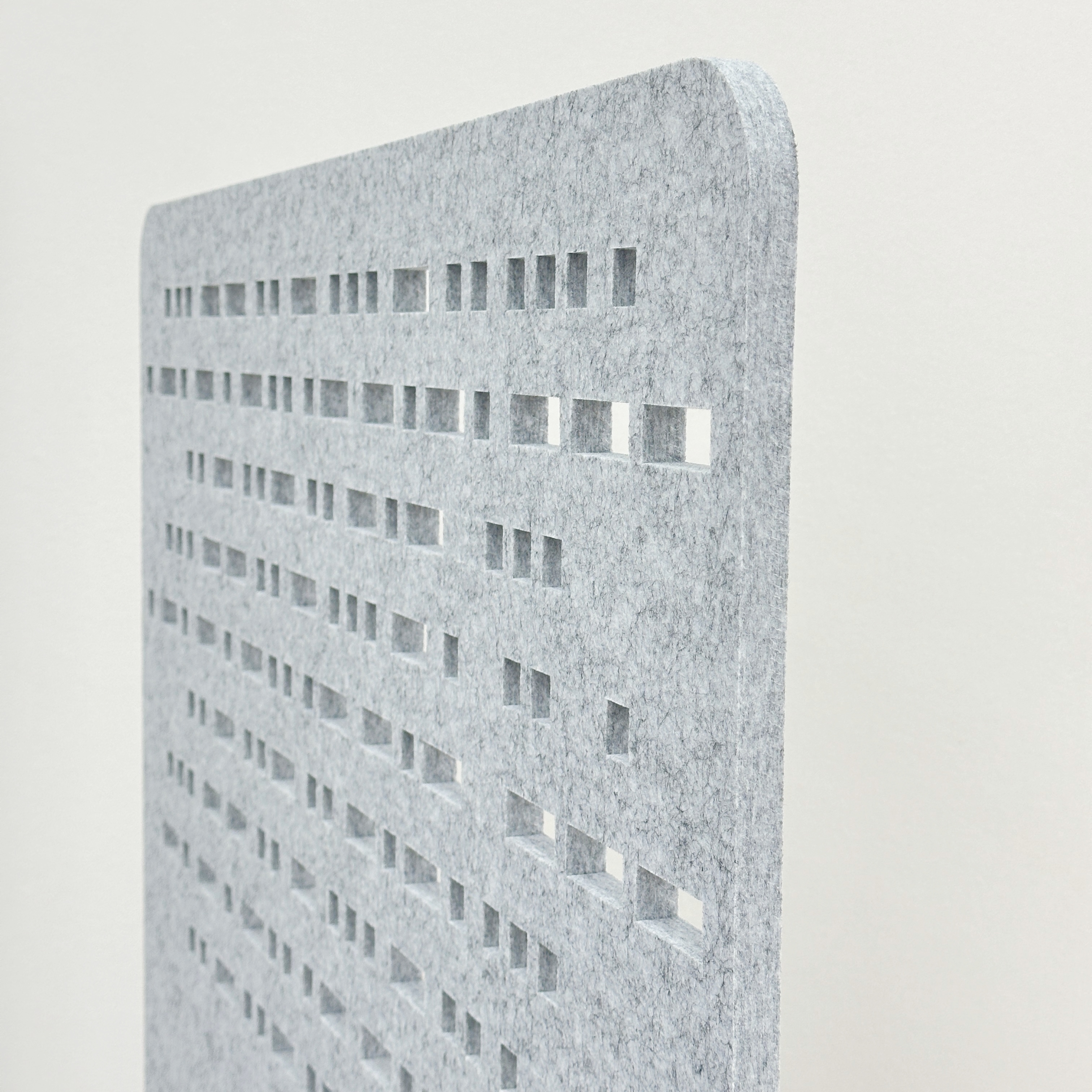
When treating a noisy home, you must distinguish between sound absorption and sound blocking. Sound blocking requires heavy, dense mass like concrete or mass-loaded vinyl. These dense materials stop traffic or neighborhood noise from passing through a wall.
In contrast, PET felt is engineered specifically for sound absorption. When sound waves hit hard, flat surfaces like drywall, they reflect. This reflection causes lingering flutter echoes that amplify the room's overall volume. The porous structure of PET felt intercepts these sound waves. As acoustic energy navigates the dense matrix of synthetic fibers, friction converts it into trace amounts of kinetic heat energy. This conversion process stops the sound from bouncing back. It effectively neutralizes the reverberation.
Acoustic engineers quantify the performance of any material using the Noise Reduction Coefficient. This scalar representation ranges from 0.0 for perfect reflection to 1.0 for perfect absorption. For instance, a rating of 0.80 indicates that the material absorbs 80 percent of the sound energy that strikes it.
Standard drywall has a rating of about 0.05. This makes it highly reflective. Most high-quality PET felt panels boast a rating between 0.40 and 0.85. The exact performance depends on the panel thickness and whether an air gap is left behind them during installation. Introducing a 50mm air cavity behind the panel significantly increases its ability to trap lower frequency sounds.
Homeowners frequently ask how modern felt compares to legacy acoustic foam. The differences in engineering, safety, and longevity are substantial. We have compiled a technical comparison to guide your selection.
Feature | PET Felt Acoustic Panels | Polyurethane Acoustic Foam |
|---|---|---|
Aesthetic Appeal | Clean, architectural lines. Matte finish resembling wool. Customizable shapes. | Industrial "egg-crate" or wedge shapes. Studio-only appearance. |
Durability | Highly impact-resistant. Will not dent or tear easily. | Fragile. Tears easily upon impact or during relocation. |
Lifespan & Degradation | UV-stable. Does not fade or crumble over time. | Oxidizes rapidly under UV light. Turns yellow and crumbles into dust. |
Health & Safety | Zero Volatile Organic Compounds. No toxic chemical binders. Hypoallergenic. | Often emits Volatile Organic Compounds. Requires chemical fire retardants. |
Maintenance | Easily cleaned with a standard vacuum brush attachment. | Traps dust deeply. Difficult to clean without damaging the foam structure. |
Acoustic comfort is a documented component of psychological well-being. Chronic exposure to domestic noise pollution forces the brain to continuously process auditory stimuli. Echoing footsteps, clattering ceramic plates, and overlapping conversations all contribute to this load. This continuous processing can elevate cortisol levels and induce acoustic fatigue. By introducing sound-absorbing materials, you systematically lower the ambient noise floor of your home. Reducing the harshness of reflected sound transforms a chaotic room into a controlled sanctuary.
The widespread shift toward remote work has exposed the acoustic flaws of standard residential rooms. Bare walls and hard floors create flutter echoes that severely degrade speech intelligibility. This makes focusing incredibly difficult. It also results in hollow, unprofessional audio during video conferences. Introducing acoustic treatments absorbs the specific frequencies associated with human speech. You will instantly notice a tighter, more professional sound profile on calls and a calmer environment for deep work.
High-end audio equipment simply cannot compensate for poor room acoustics. When watching a film in an untreated room, the direct sound from your speakers collides with the delayed, reflected sound from the walls. This creates a muddy audio profile where dialogue becomes nearly impossible to decipher. Placing acoustic panels at the primary reflection points absorbs these early reflections. The primary reflection points are the walls immediately to the left and right of the speakers. The result is crisp dialogue and a tightened bass response.
Bedrooms are intended to be the quietest spaces in the house. Yet they frequently suffer from internal noise transmission. A late-night television in the living room or a running washing machine down the hall can easily disrupt rest. PET felt panels will not soundproof the wall entirely. However, placing them strategically in a bedroom dampens the ambient noise that does manage to enter the space. This acoustic softening maintains a stable environment conducive to restorative sleep.
Modern living rooms are often the most acoustically hostile environments in a home. They feature large windows, hardwood floors, and minimalist furnishings. The most effective engineering strategy here is to treat the large, parallel walls. Installing panels behind the main seating area or framing the television can immediately tame the aggressive echoes caused by everyday activities.
A home office demands acoustic precision. Beyond standard wall applications, PET felt is highly versatile. You can use it as a functional, sound-absorbing pinboard directly above a desk. In shared or open-plan offices, establishing acoustic boundaries is critical. Utilizing versatile floor-standing acoustic dividers acts as a physical barrier. These dividers intercept sound waves before they travel across the room. They provide both necessary spatial division and excellent reverberation control.
Dining areas and kitchens are notorious for noise amplification. The abundance of hard, reflective surfaces like stone countertops, tile backsplashes, and wooden tables turns the simple act of preparing dinner into a cacophony. Wall space is often limited by cabinetry. Suspended ceiling baffles or precision-cut wall panels placed above the wainscoting can effectively soften the acoustic harshness of these gathering spaces.
The acoustic performance of a panel is heavily dictated by its thickness and material density. When selecting a product, you must match the specifications to the specific acoustic problem you are trying to solve.
9mm Panels: These typically feature a density around 1300 to 1500 grams per square meter. They are ideal for general echo reduction in small rooms. They effectively absorb high-frequency sounds like clinking glass.
12mm Panels: This is the industry standard for residential spaces, often weighing around 1900 grams per square meter. They provide a balanced absorption profile. They specifically target and mitigate human speech frequencies between 500 Hertz and 2000 Hertz.
24mm Panels: These dense panels are suited for severe acoustic issues or dedicated home theaters. The increased depth allows the panel to absorb lower-mid frequencies. This provides a highly controlled acoustic environment.
One of the primary advantages of PET felt is its ease of installation. The panels are lightweight and rigid. You do not need to hire specialized contractors or use heavy-duty mounting hardware to achieve professional results.
For a permanent, flush application, standard construction adhesive can be applied to the back of the panel and pressed directly onto the drywall. If you require a less permanent solution, high-bond acrylic double-sided tape provides a secure hold without damaging the wall. This tape is ideal for lighter 9mm or 12mm panels. For heavier 24mm panels, mechanical fasteners like aluminum Z-clips can be easily screwed into the wall studs. This allows the panels to hang securely. Using Z-clips also creates a small air gap behind the panel, which actually increases the overall acoustic absorption rating.
Acoustic comfort should be treated with the exact same level of importance as lighting design and furniture selection. PET felt panels represent a significant advancement in residential acoustic engineering. By successfully merging high-performance sound absorption with sustainable material science, they provide a tangible solution to the noise pollution endemic to modern open-concept living.
You might be looking to enhance focus in your home office, optimize audio clarity in your living room, or create a more peaceful environment for your family. These materials offer an empirical, highly effective upgrade. Take the first step toward building a quieter home today. Explore versatile, high-quality PET felt acoustic panel solutions from YH Acoustic, and transform your echoing rooms into comfortable sanctuaries.
They are highly effective at absorbing sound within a room to reduce echo and overall volume. However, they are not designed to completely soundproof a wall against external noise. Their primary engineering function is to improve internal acoustics rather than block heavy noise transmission through structural walls.
Yes, absolutely. Manufacturers produce them from non-toxic, recycled plastics. They do not emit Volatile Organic Compounds. They are completely free of irritating materials like fiberglass. This makes them exceptionally safe for residential environments.
These panels require very low maintenance. A routine dusting, using a lint roller, or light vacuuming with a brush attachment is usually sufficient to keep them looking pristine. For localized stains, gently dabbing the area with a damp cloth and mild soap works perfectly.
Yes, the material is highly customizable. You can easily cut the panels to fit around electrical outlets or light switches. You can also create custom geometric shapes using a sharp utility knife and a metal straight edge.
As a general acoustic engineering guideline, covering approximately 15 to 20 percent of a room's total wall surface area is usually enough. This coverage ratio will significantly reduce reverberation time and drastically improve overall home comfort.
Because PET felt is manufactured from highly durable thermoplastic polymers, it possesses an exceptionally long lifespan. In a standard climate-controlled residential environment, these panels will easily last 10 to 15 years without losing their structural integrity, color, or sound-absorbing properties.
Yes, they are highly beneficial for home studios. Placing panels at first reflection points and corners controls standing waves and flutter echoes. This provides a flatter frequency response in the room. You will hear your audio mix much more accurately without the interference of room reverberation.