
Views: 0 Author: Site Editor Publish Time: 2026-10-28 Origin: Site


Modern interior architecture heavily favors hard, reflective surfaces. Sweeping hardwood floors, expansive glass partitions, and minimalist furniture certainly look visually stunning. However, they consistently create a chaotic acoustic environment. Sound waves bounce uncontrollably off these rigid boundaries. This continuous reflection leads to severe noise pollution, persistent echoing, and poor speech intelligibility in both residential living spaces and bustling corporate offices. Imagine trying to hold a focused meeting in a conference room where every spoken word rings in the background for seconds afterward. It is highly distracting and mentally exhausting for everyone involved.
To address this widespread architectural flaw, acoustic wall panels serve as a highly effective engineering intervention. They manage reverberation times and control ambient background noise. Among the various materials available on the market today, Polyethylene Terephthalate, commonly known as PET felt, has rapidly emerged as the modern, eco-friendly standard for acoustic treatment.
This comprehensive technical guide breaks down exactly how these materials absorb sound energy. Specifically, we will explore why upgrading to a specialized architectural design—such as a premium bevel groove PET felt acoustic panel—is an excellent strategic decision. It perfectly balances high-performance noise reduction with stunning interior aesthetics.
Key Takeaways
Energy Conversion: PET felt panels function by absorbing airborne sound waves and converting that kinetic acoustic energy into microscopic thermal energy through internal fiber friction.
Sustainable Sourcing: Offering exceptional sustainability, these panels are manufactured from recycled post-consumer plastic water bottles. This makes them a safe, non-toxic, and environmentally responsible building material.
Structural Advantage: A grooved structural design provides superior noise reduction compared to standard flat alternatives. Precisely cut channels significantly increase the exposed surface area, trapping sound waves from multiple complex angles.
Versatile Integration: From executive boardrooms to home recording studios, these panels present a lightweight, easy-to-install, and visually striking alternative to traditional polyurethane foam or heavy slatted wooden boards.
Before diving into the intricate physics of sound absorption, understanding the raw material itself is crucial. PET felt is a highly dense, non-woven fabric material created by compressing recycled plastics into rigid or semi-rigid boards. Over the last decade, it has become the gold standard in modern acoustic engineering. Architects prize it equally for its structural integrity and its positive environmental impact.
The manufacturing process of PET felt represents a massive triumph of modern recycling and the circular economy. Facilities collect post-consumer plastic water bottles in bulk, thoroughly sanitize them, and shred them into tiny plastic flakes. Industrial extruders then melt these raw flakes down and spin them into ultra-fine synthetic microfibers. Through a specialized manufacturing process known as needle-punching, machines aggressively tangle and compress these microscopic fibers under extreme heat. This forms a dense, durable panel. Ultimately, this process gives discarded single-use plastics a permanent second life as high-performance architectural materials.
Indoor air quality remains a primary concern in both residential and commercial building design. Traditional acoustic insulation, such as fiberglass or mineral wool, can shed irritating micro-particles into the air. They also frequently contain formaldehyde-based chemical binders. In stark contrast, PET felt is entirely safe for continuous human exposure. It contains no harmful Volatile Organic Compounds, toxic adhesives, or chemical irritants. This renders it a hypoallergenic and odorless option perfectly suited for schools, nurseries, and enclosed office spaces.
To truly grasp how these panels function, we must briefly examine the fundamental physics of sound. Sound travels through the air as invisible waves of mechanical energy. When these energetic waves strike a hard, flat surface like drywall or a concrete ceiling, they bounce back into the room. This continuous reflection creates overlapping echoes known as reverberation. Acoustic treatments are specifically engineered to interrupt this chaotic bouncing process.
The secret behind the remarkable acoustic performance of PET felt lies deep within its microscopic structure. Because the panel is constructed from compressed, non-woven synthetic fibers, it is incredibly porous. The needle-punching process creates millions of tiny, interconnected air pockets throughout the core of the material. Rather than violently bouncing off a hard exterior, sound waves are forced to penetrate deep into this maze-like internal structure. From an engineering perspective, this creates optimal airflow resistance.
As sound waves navigate these porous pockets, they force the microscopic PET fibers to vibrate rapidly. This subtle physical movement creates viscous friction between the trapped air molecules and the synthetic fibers. According to the first law of thermodynamics, energy cannot be destroyed; it can only be transformed. The internal friction successfully converts the mechanical kinetic energy of the sound wave into trace amounts of thermal energy. This microscopic heat dissipates harmlessly throughout the panel. Consequently, the panel effectively kills the sound wave and prevents it from reflecting back into your living space.
Acousticians measure the efficiency of an absorptive material using the Noise Reduction Coefficient. This metric operates on a scale from 0 to 1, where 0 indicates perfect reflection and 1 indicates perfect absorption. High-quality PET felt generally features a Noise Reduction Coefficient rating between 0.70 and 0.90. In practical terms, a rating of 0.85 means the panel successfully absorbs 85 percent of the sound waves that strike it, leaving only a faint 15 percent to reflect back into the room.
Recent market data and architectural design reports reveal a massive global shift toward sustainable, health-conscious building materials. As open-plan offices, co-working spaces, and hybrid work environments become the absolute norm, the demand for effective noise mitigation has skyrocketed. Employees returning to the office frequently cite background noise as their primary productivity killer.
Furthermore, the commercial real estate sector is increasingly driven by ESG goals and green building certifications like LEED and WELL. Modern interior designers are no longer willing to compromise aesthetics by settling for industrial-looking fiberglass panels or toxic, crumbling foams. The current architectural trend heavily favors circular economy products. This growing intersection of environmental responsibility and high-performance sound absorption is rapidly driving the global acoustic panel market. Consequently, manufacturers are innovating beyond basic flat boards to create textured, architectural finishes that serve dual purposes as functional utility and striking wall art.
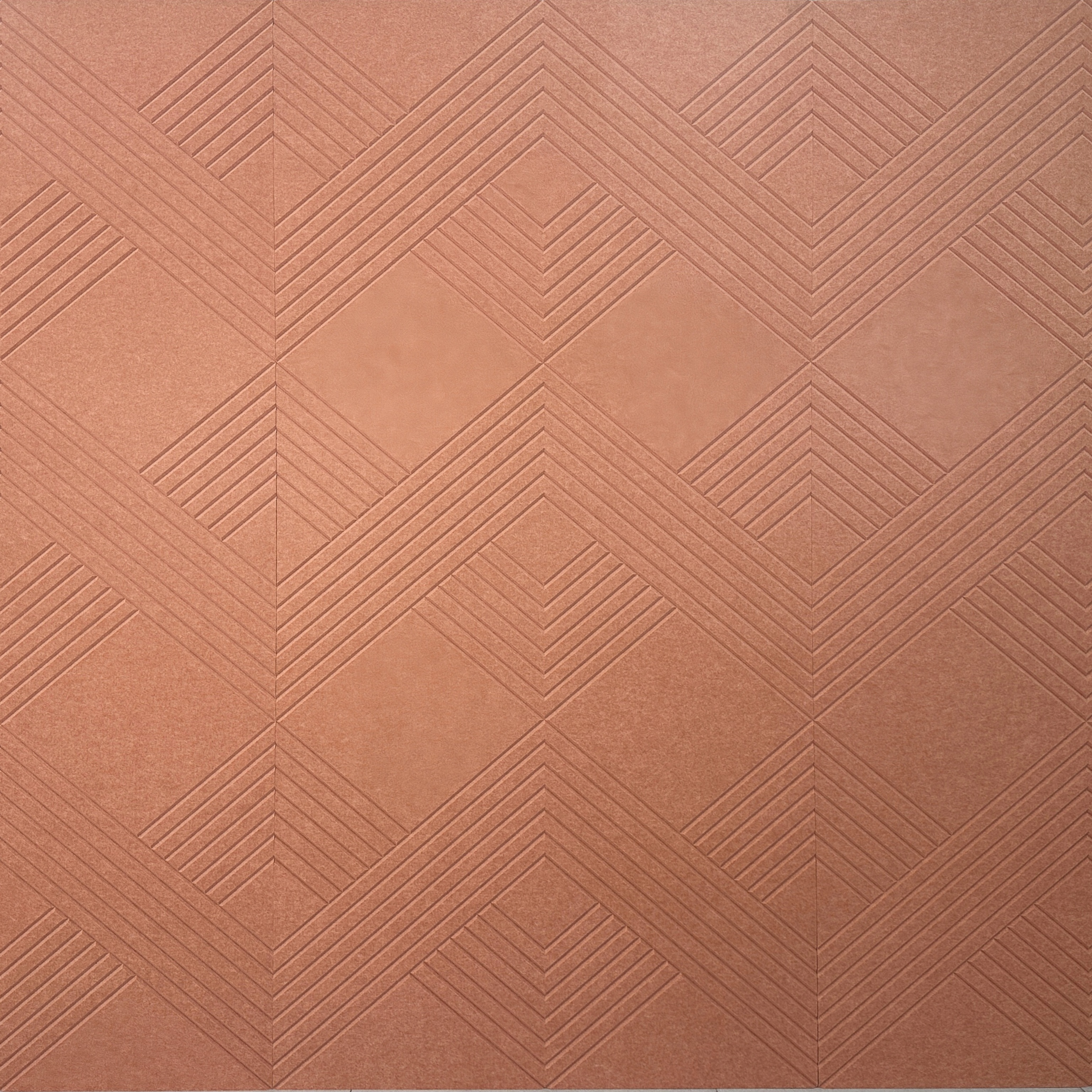
While standard flat PET felt panels are undeniably effective, the physical geometry of an acoustic treatment matters just as much as the core material itself. Transitioning to a specialized geometry provides measurable advantages that elevate both the acoustic efficiency and the visual appeal of the installation. For instance, utilizing a bevel groove PET felt acoustic panel transforms a basic sound absorber into a multi-functional acoustic diffuser.
A fundamental principle of acoustic engineering dictates that greater surface area yields greater sound absorption. By cutting precise V-shaped or U-shaped bevel grooves into the face of the panel, manufacturers significantly increase the total surface area exposed to the room without increasing the overall footprint on the wall. Consequently, a grooved panel has far more physical material interacting with the air than a perfectly flat board of the exact same dimensions. This allows it to absorb a significantly higher volume of ambient noise.
In reality, sound waves rarely hit a wall at a perfect 90-degree angle. They bounce around a room chaotically from floor to ceiling. The angled, beveled edges of the grooves act as built-in acoustic diffusers. They help to scatter and trap sound waves that strike the wall from oblique angles. This multi-directional trapping mechanism is particularly effective at breaking up high-frequency flutter echoes. Flutter echo is that rapid, ringing sound that often occurs when clapping your hands between two parallel, bare walls.
Beyond the raw acoustics, bevel groove panels offer a premium, architectural look that flat panels simply cannot match. The linear grooves create elegant shadow lines and a profound sense of visual depth. This instantly breaks up the boring monotony of a blank wall. This sophisticated design bridges the gap between acoustic necessity and high-end interior decor, empowering designers to create stunning feature walls that look highly intentional.
When planning an acoustic upgrade, property owners frequently weigh PET felt against older, more traditional materials. Understanding these objective differences is crucial for making a smart, long-term purchasing decision.
For decades, polyurethane acoustic foam was the default choice for budget-conscious soundproofing. However, this foam degrades rapidly over time. When exposed to natural UV light and regular air circulation, polyurethane foam discolors, becomes brittle, and eventually crumbles into dust. Furthermore, foam generally looks cheap and unprofessional outside of a dedicated podcasting booth. In contrast, PET felt is highly durable, UV-resistant, and provides a sleek, modern finish that elevates a room's overall design.
Slatted wood acoustic panels have surged in popularity recently for their warm, natural aesthetics, but they present distinct logistical hurdles. Solid wood is incredibly heavy, expensive to ship, and requires specialized saws and heavy-duty structural wall anchors to install properly. Moreover, the wood itself reflects sound; the actual absorption comes entirely from the thin layer of felt hidden behind the wooden slats. High-density PET panels can easily mimic the linear, slatted look of wood while remaining incredibly lightweight. They are generally more cost-effective and can be quickly cut with a simple utility knife.
Technical Feature | Bevel Groove PET Felt | Polyurethane Foam | Acoustic Wood Panels |
|---|---|---|---|
Aesthetic Finish | Premium, modern, architectural | Cheap, industrial | High-end, natural |
Material Durability | Excellent (impact and UV resistant) | Poor (crumbles and oxidizes) | Good (but prone to surface scratches) |
Installation Weight | Very lightweight (approx. 1.3-1.9 kg/sqm) | Ultra-lightweight | Heavy (requires structural support) |
Installation Method | Easy (construction adhesive or tape) | Easy (spray adhesive) | Difficult (requires screws and studs) |
Environmental Impact | High (100% recycled plastics) | Low (petrochemical based) | Varies (depends on timber sourcing) |
Choosing the right acoustic material requires matching product specifications to your specific room conditions. Instead of guessing, follow these standardized engineering guidelines to ensure you select a bevel groove PET felt acoustic panel that actually solves your noise problem.
PET felt panels typically come in standard thicknesses of 9mm, 12mm, and 24mm. For general office environments dealing with high-frequency chatter and ringing phones, a 9mm or 12mm panel is highly effective. However, if you are treating a home theater, a music studio, or a room with heavy machinery, step up to a 24mm thickness. The thicker material provides much better absorption coefficients for problematic low-to-mid frequency sound waves.
Density directly impacts both durability and acoustic performance. Look for panels with a density ranging from 1300g/sqm to 1900g/sqm. This ensures the panel remains rigid on the wall without sagging over time. Additionally, safety is non-negotiable in commercial building codes. Ensure your selected panels possess a Class A fire rating based on ASTM E84 testing, guaranteeing they will not act as a rapid fuel source in the event of a fire.
Because the synthetic fibers are dyed before the intense heat compression process, the vibrant color of a premium PET felt panel remains consistent throughout its entire thickness. When the bevel grooves are carved into the material, the newly exposed inner channels reveal the exact same flawless color as the surface. This unique manufacturing trait ensures a cohesive, premium look without the tedious need for edge-banding, painting, or framing.
Because they flawlessly combine high acoustic performance with visual elegance, these architectural panels shine in a wide variety of demanding environments.
Modern open-plan offices are notorious for terrible Speech Transmission Index ratings due to overlapping conversations. Installing grooved panels on conference room walls actively prevents private meetings from echoing into the hallway. It also reduces the ambient noise floor of the main office, directly improving employee focus and overall productivity.
To achieve crisp, reference-quality cinematic audio, a room's reverberation time must be carefully controlled. Bevel grooved panels help tame early mid-to-high frequency reflections from side walls. This ensures that the listener hears the direct sound from the expensive speakers rather than a muddy, delayed echo bouncing off the drywall.
Content creators desperately need a deadened acoustic environment to capture clean, professional audio. However, with the massive rise of video podcasts, the background must also look visually engaging on camera. These panels provide the necessary acoustic dampening to eliminate room echo without sacrificing the sophisticated on-camera aesthetics required for a professional streaming setup.
Proper installation is just as important as the quality of the material itself. Even the highest-rated acoustic panel will severely underperform if placed incorrectly in a room.
Placement matters immensely. For maximum efficiency, panels should be placed at the first reflection points. These are the exact spots on the wall where sound from a source bounces once before reaching the listener's ear. Generally, keeping the panels mounted at ear level yields the most noticeable reduction in distracting mid-to-high frequency noise.
Here is a professional acoustic engineering tip: you do not have to mount the panels perfectly flush against the wall. Leaving a small air gap behind the panel by mounting it on thin wooden furring strips can drastically enhance its low-frequency performance. Based on the quarter-wavelength rule in acoustics, the sound wave must pass through the panel, travel through the air gap, bounce off the hard wall, and pass through the absorptive panel a second time. This effectively doubles the material's absorption capability.
PET felt acoustic wall panels provide a scientifically proven, highly effective solution to the noise pollution that plagues modern, minimalist interiors. By utilizing the physics of porous fiber friction, these panels seamlessly convert distracting echoes and reverberations into harmless thermal energy. Upgrading to a bevel groove design maximizes this sound absorption by dramatically increasing surface area and facilitating multi-directional trapping. All the while, it delivers a sophisticated, architectural aesthetic to your space.
Furthermore, by utilizing recycled plastics, this acoustic treatment actively supports global sustainability and circular economy efforts without ever compromising on safety, durability, or performance. If you are ready to permanently transform your chaotic, noisy environment into a focused, comfortable space, explore the bevel groove PET felt acoustic panel solutions at YH Acoustic today to find the perfect balance of cutting-edge design and acoustic engineering.
It is very important to clarify the distinct difference between sound absorption and sound blocking. PET felt panels are highly effective at sound absorption. This means they actively reduce internal echoes, reverberation, and ambient noise within a room, vastly improving internal acoustics. However, they are not designed for structural soundproofing, which involves blocking noise from physically leaving or entering a room through the walls. True soundproofing requires dense, heavy mass like specialized drywall or mass-loaded vinyl.
The beveled grooves provide a measurable acoustic advantage by significantly increasing the total exposed surface area of the panel. A larger surface area means more material is available to absorb sound. Additionally, the angled cuts act as diffusers, trapping sound waves that hit the wall from various complex angles much more efficiently than a flat surface. Beyond acoustics, the grooves provide a premium, modern architectural look with elegant shadow lines.
As a general engineering rule of thumb, you should aim to cover between 15 to 30 percent of a room's total wall surface area to achieve noticeable acoustic improvement. For light echo reduction in a home office, 15 percent coverage is usually sufficient. For heavy noise environments like music studios or loud restaurants, aim for 25 to 30 percent coverage to properly control reverberation times.
No, PET felt panels will not stop noise from transmitting through a shared wall from a noisy neighbor. Sound transmission loss requires decoupling and heavy mass. While adding acoustic panels will make your own room sound better and reduce the echo of the noise that does enter, it will not prevent the sound waves from penetrating the drywall structure.
PET felt is exceptionally durable and low-maintenance. Because it is a densely compressed, non-woven material, it does not trap dust easily like traditional woven fabrics. For routine cleaning, simply lightly vacuum the panels using a soft brush attachment to remove any surface dust. For occasional stains or scuff marks, spot clean the affected area using a soft cloth dampened with mild soap and warm water, then allow it to air dry naturally. Avoid using harsh chemical solvents.
Yes, PET felt is exceptionally safe for all residential environments. It is non-toxic, hypoallergenic, and completely free of formaldehyde and Volatile Organic Compounds. Unlike traditional fiberglass insulation, it does not shed irritating micro-particles into the air when touched or bumped, making it perfectly safe for homes, nurseries, and pet-friendly spaces.
Absolutely. Despite their high density and structural rigidity, PET felt panels are relatively easy to modify on-site. They can be precisely cut using a sharp utility knife along a straight edge, heavy-duty shears, or even a track saw. This flexibility allows for seamless custom installations around electrical outlets, light switches, window frames, or specific architectural wall dimensions.