
Views: 0 Author: Site Editor Publish Time: 2026-08-12 Origin: Site


Architects, facility managers, and designers face a persistent challenge today. You must balance strict project budgets and seamless aesthetic integration while delivering noticeable acoustic improvements. Open-plan layouts and glass-heavy offices actively amplify sound. We often see stunning workspaces rendered unusable by unbearable echo and poor speech privacy. This is where 9 mm PET felt acoustic panels step in as the industry-standard baseline for wall applications. They offer a lightweight, highly customizable alternative to traditional fabric-wrapped fiberglass boards. You get reliable acoustic performance without compromising your initial design vision. This guide provides a realistic, specification-driven framework for evaluating, selecting, and installing these materials. You will learn how to verify performance data, mitigate installation risks, and ensure project success without unexpected delays.
Performance Reality: A 9 mm thickness primarily targets mid-to-high frequency noise (like human speech); NRC ratings improve significantly when installed with an air gap.
Compliance is Non-Negotiable: Validated ASTM E84 Class A fire ratings and low-VOC (sustainability) certifications must be confirmed via third-party test reports prior to specification.
Design Flexibility: Thin PET felt panels excel in custom applications (large format seamless coverage, V-groove etching, and acoustic printing) but require specific detailing to maintain performance.
Installation Strategy: Successful rollout depends on proper wall preparation, appropriate adhesive or mechanical mounting choices, and precise on-site cutting protocols.
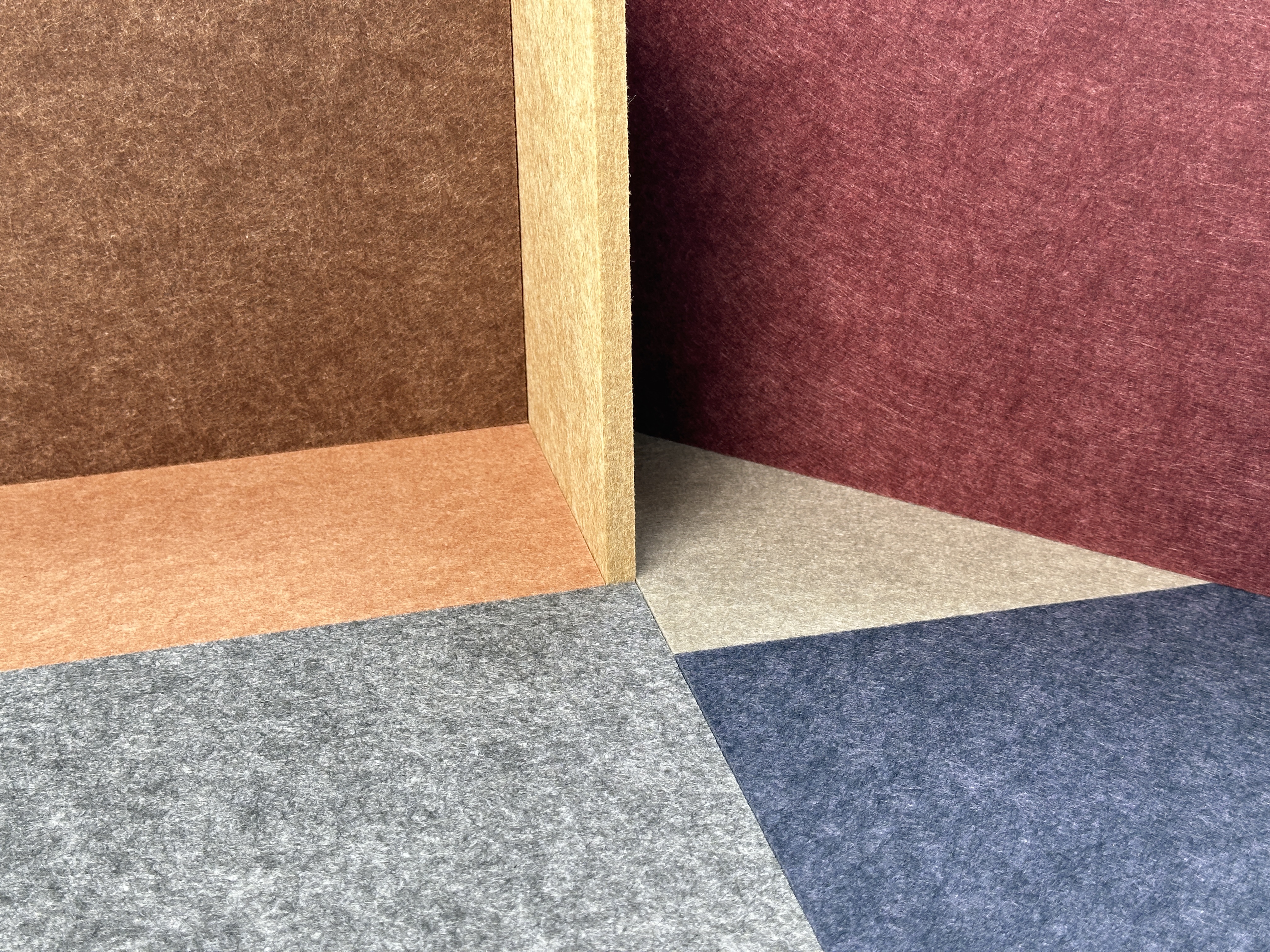
Modern open offices suffer from excessive reverberation and severe speech privacy issues. Standard building materials like drywall, polished concrete, and architectural glass act as acoustic mirrors. They actively reflect voice frequencies back into the space. This continuous bouncing creates a distracting echo. Productivity drops sharply when teams cannot concentrate or hold private conversations. You must introduce absorptive surfaces to counteract this harsh environment.
We consider the 9 mm thickness the absolute "sweet spot" for vertical wall applications. A standard thin PET felt panel provides sufficient acoustic dampening for normal human speech frequencies. It achieves this target without the visual bulk, excessive weight, or higher manufacturing cost associated with 12 mm or 24 mm boards. Facility managers appreciate the sleek profile because it does not encroach on usable floor space.
When evaluating cost versus coverage, broad surface application always wins. Effective room acoustics rely heavily on treating a large enough surface area. Covering an entire feature wall with a 9 mm sheet delivers much better overall reverberation control than placing a tiny, highly absorbent thick panel in a single corner. This specific strategy allows you to maximize your acoustic footprint while rigorously protecting the project budget.
Assuming thicker material is always necessary for standard office echo.
Treating less than 15% of the room's total wall surface area.
Ignoring the acoustic reflection caused by adjacent glass partitions.
You must evaluate potential materials using strict, verifiable metrics. Marketing brochures often exaggerate performance capabilities. Specifiers need hard data to justify material choices and ensure building code compliance.
Baseline acoustic expectations revolve around the Noise Reduction Coefficient (NRC). When mounted directly to standard drywall using adhesive, a 9 mm panel typically offers an NRC of 0.30 to 0.45. This rating means the material absorbs 30% to 45% of the sound waves hitting it. It effectively catches the sharpest conversational tones.
Pro-Tip for Specifiers: You can drastically improve this performance without upgrading the material. Introduce a 1-inch or 2-inch air cavity behind the panel using wooden furring strips. This trapped air acts as an additional acoustic buffer. This simple structural adjustment can push the overall NRC up to 0.70 or higher. This gives you high-end performance on a mid-tier budget.
Fire safety codes remain non-negotiable in commercial spaces. Warn your clients against procuring cheap, unverified imported felts. Specify clearly that all products must carry a verifiable ASTM E84 Class A fire rating. They must exhibit a low flame spread index and a low smoke developed index. For international projects, demand the EN 13501-1 B-s1, d0 classification.
Sustainability and occupant health also drive modern specifications. Modern enclosed office environments demand zero VOC emissions. Require a minimum post-consumer recycled content, usually 60% or more. Look for trusted third-party labels. Certifications like OEKO-TEX, Greenguard Gold, or Declare ensure the material will not off-gas harmful chemicals into the workspace. Proper specification guarantees safe commercial sound absorption.
Review the standard specification criteria below.
Evaluation Category | Minimum Baseline Standard | Ideal Specification Target |
|---|---|---|
Acoustic Performance (Direct Mount) | NRC 0.30 | NRC 0.45+ |
Acoustic Performance (Air Gap Mount) | NRC 0.55 | NRC 0.75+ |
Fire Rating Compliance | ASTM E84 Class B (Rarely Acceptable) | ASTM E84 Class A / EN 13501-1 |
Sustainability & Off-gassing | No visible certifications | Greenguard Gold, 60%+ Recycled PET |
Specifiers must routinely choose between specifying large format 9 mm sheets and smaller modular tiles. Large sheets provide seamless, floor-to-ceiling coverage. They create a clean, monolithic aesthetic favored in modern corporate boardrooms. Modular tiles, conversely, offer playful geometries, color-blocking opportunities, and significantly easier shipping logistics.
You can heavily customize these boards to match complex interior branding. V-grooving and CNC cutting allow designers to add deep texture and architectural lines. These digital cutting techniques remove a fraction of the material without compromising the panel's overall structural integrity.
Specifying printed designs requires deep technical caution. If you want imagery, mandate dye-sublimation processes or acoustically transparent inks. Warning: Heavy UV-cured inks act as a rigid sealant. They fill the microscopic porous surface of the felt. This completely destroys the panel's sound-absorbing properties. Always specify a verified custom acoustic panel engineered specifically for acoustic transparency.
Edge finishing provides a distinct manufacturing advantage. The 9 mm material remains highly homogeneous. When you cut it, the color remains consistent all the way through the core. The exposed edges do not require edge-banding, frames, or special trim. This physical reality saves manufacturing time and dramatically reduces on-site labor costs.
Analyze design approach differences in the comparative chart below.
Design Approach | Visual Impact | Acoustic Continuity | Logistical Difficulty |
|---|---|---|---|
Large Format Sheets (9ft x 4ft) | Monolithic, minimalist, seamless. | Excellent. No breaks in absorption. | High. Requires dedicated freight. |
Modular Tiles (e.g., 2ft x 2ft) | Geometric, patterned, color-blocked. | Good. Minor gaps act as sound breaks. | Low. Ships easily via standard parcel. |
CNC V-Grooved Panels | Highly textured, architectural depth. | Excellent. Increases surface area slightly. | Medium. Requires careful handling of edges. |
Successful acoustic projects rely entirely on flawless installation execution. You must select the mounting method based on budget, timeline, and future facility maintenance needs.
The direct-to-wall adhesive method is best for speed and tight budgets. Installers apply heavy-duty construction adhesive to the back of the felt and press it directly onto the substrate.
Risk: This method is completely permanent. It requires a Level 4 drywall finish and a dust-free primer coat for the glue to bond. Wall damage is practically guaranteed upon future removal or office remodeling.
Mechanical and air-gap mounting offers a superior long-term alternative. Consider using Z-clips, wooden furring strips, or metal standoff hardware.
Benefit: This method significantly increases the NRC by creating that crucial air gap. Furthermore, it allows facility management teams to easily unclip panels. They can replace damaged sections or access hidden wall utilities without tearing down the wall.
Acknowledge early in the project that architectural walls are rarely perfectly plumb. Installers will inevitably need to trim panels in the field. You must specify strict cutting protocols to avoid ruining the material. Installers must use track saws equipped with appropriate fine-tooth blades. If using manual tools, they must use heavy-duty utility knives. They need to snap the blade every few cuts. Dull tools create frayed, fuzzy, and highly unprofessional edges during field modifications.
Acclimate the panels in the designated office space for 48 hours prior to installation to prevent expansion or contraction.
Use a laser level to establish perfectly straight baseline starting points.
Ensure the installer's hands are clean or mandate the use of clean white cotton gloves to prevent oil stains on lighter-colored felts.
Always test construction adhesives on a small scrap piece to verify holding strength and cure time.
Selecting the right manufacturing partner dictates the final quality of the installation. Thorough vetting prevents costly job-site rejections.
Never take sales and marketing claims at face value. Acoustic numbers are frequently exaggerated. You must request the actual, unedited acoustic test reports from an accredited laboratory. Scrutinize the mounting method used during their test. If they tested the product with a 4-inch air gap, you will not get those same results with a direct-glue installation. Demand current fire test certificates matching the exact product line you intend to specify.
Always request physical samples of the office acoustic wall panel. You must verify the material density yourself. High-quality 9 mm PET felt should feel dense and rigid in your hands. It should not flop or bend easily like cheap craft felt. Check for color consistency across different production batches. If you specify custom graphics, inspect a printed sample to ensure the ink has not sealed the porous surface.
Address shipping logistics and lead times before finalizing the purchase order. Shipping large format sheets often requires dedicated flat-bed freight shipping. They must be packaged flat on massive custom pallets. This process takes considerable time and adds freight costs. Modular tiles, however, stack easily in standard boxes to avoid site delays.
Follow this numbered sequence to finalize your supplier choices:
Calculate the total required square footage based on a target of 15% to 20% total wall coverage.
Request third-party acoustic test reports (ISO 354 or ASTM C423).
Request independent fire safety certificates (ASTM E84).
Order 12x12 inch physical samples to verify rigidity and color matching.
Confirm lead times, freight requirements, and off-loading responsibilities at the job site.
Specifying 9 mm PET felt acoustic panels requires a careful balance. You must align your aesthetic intent with fundamental acoustic physics and strict fire code compliance. By focusing on the 9 mm thickness, you leverage a cost-effective, lightweight solution perfect for broad wall coverage. Remember that installation methods dictate final performance. Always consider an air-gap mounting strategy if your budget allows.
To move forward, calculate your required square footage based on your room's exact volume. Request technical cut-sheets, test data, and physical samples from vetted suppliers. Finalize your specifications by clearly defining the acceptable mounting hardware and on-site cutting protocols. These precise steps will ensure a beautiful, quiet, and highly productive office environment.
A: A 12 mm panel offers slightly better low-frequency absorption and increased physical rigidity. However, for targeting standard human speech and conversational echo in offices, 9 mm is highly effective. It is also significantly more cost-efficient for covering large wall expanses.
A: No. You must separate the concepts of sound absorption and sound blocking. PET felt absorbs echo inside a room, reducing reverberation. It does not block noise transfer through a wall. Blocking requires heavy mass, like mass loaded vinyl (MLV) or extra drywall layers.
A: Routine maintenance involves simply vacuuming the panels using a clean brush attachment to remove surface dust. For minor stains, gently spot clean using a damp cloth with mild soap and water. Always verify bleach-cleanable claims directly with the manufacturer before using harsh chemicals.
A: It only matters in two specific scenarios. First, if you use CNC-cut perforated panels where the wall visually shows through the gaps. Second, if you use heavy adhesives that require a specific drywall primer or paint cure time to ensure proper chemical adhesion.