
Views: 0 Author: Site Editor Publish Time: 2026-08-25 Origin: Site


Many commercial specifiers default to standard 9mm or 12mm panels for basic echo reduction. We see this baseline assumption across modern office designs and hospitality build-outs every day. However, architectural trends increasingly favor exposed HVAC systems, polished concrete floors, and expansive open-plan layouts. Standard panel thicknesses often fall short in effectively managing lower-mid frequencies in these demanding spaces. Severe acoustic discomfort happens when sound bounces freely off hard surfaces. We designed this guide to provide architects, acoustic consultants, and facility managers with an evidence-based evaluation framework. You will learn exactly when to specify a 24mm thickness over standard options to achieve optimal sound control. We examine performance data, structural requirements, and fire compliance metrics. Read on to master the specification process and eliminate acoustic guesswork from your next major project.
Standard 9mm/12mm panels primarily absorb high-frequency noise (e.g., ringing, sharp chatter); 24mm panels are required for broader spectrum absorption, including mid-to-low frequencies like HVAC hum and heavy foot traffic.
Upgrading to a 24mm thickness typically shifts the Noise Reduction Coefficient (NRC) from the ~0.30-0.45 range to 0.70-0.85+ (depending on mounting method and air gaps).
Specifying thicker panels requires structural foresight regarding mounting hardware, weight limits for suspended baffles, and adherence to commercial fire codes (ASTM E84 / EN 13501-1).
24mm solutions offer higher structural rigidity, making them ideal for freestanding partitions, large-span ceiling clouds, and high-impact zones.
Modern commercial spaces suffer from complex acoustic challenges. Designers love exposed ceilings and concrete floors. These hard materials reflect sound energy perfectly. You experience this reverberation as a harsh, uncomfortable din. Specifiers frequently attempt to solve this issue using standard 9mm or 12mm acoustic felt. They soon discover serious performance gaps. Let us explore exactly why these thinner solutions fail to tame a high-noise interior.
Acoustic panels behave differently depending on their thickness. Standard 9mm and 12mm panels perform well at absorbing high frequencies. You will notice they easily capture sharp chatter, ringing phones, and clinking glasses. However, they fail miserably at capturing frequencies below 500 Hz. Low-frequency sound waves carry more energy. They easily pass right through thin materials.
This creates a compounding effect in busy environments like restaurants, auditoriums, and open-plan offices. The HVAC hum, heavy foot traffic, and deep vocal tones bounce endlessly around the room. Low-frequency reverberation quickly builds up. People naturally raise their voices to be heard over the drone. This pushes the overall noise level even higher. You cannot achieve true acoustic comfort without managing these lower-mid frequencies.
Many contractors fall into the over-coverage trap. They assume applying more 9mm panels will solve severe acoustic issues. They cover entire walls and ceilings. Unfortunately, increasing the surface area cannot compensate for inadequate panel depth. Physics dictates how sound absorption works. A material must be thick enough to interact with the longer wavelengths of low-frequency sound. Covering 100% of a wall in 9mm felt will make the room sound unnaturally dead at high frequencies. Yet, the low-frequency boom remains completely untouched. You end up wasting budget on materials and labor while failing to solve the core problem.
You need a concrete way to evaluate commercial acoustic treatments. A successful intervention relies on four measurable criteria. First, you must hit target reverberation times (RT60). RT60 measures how long sound takes to decay by 60 decibels. Open offices usually target 0.6 to 0.8 seconds. Second, the speech intelligibility index must improve. People need to understand conversations clearly across tables or desks. Third, the panels must offer seamless visual integration. Acoustic elements should complement the architectural vision. Finally, the solution must achieve budget alignment. Installing fewer, highly efficient panels often costs less than over-treating a room with cheap materials.
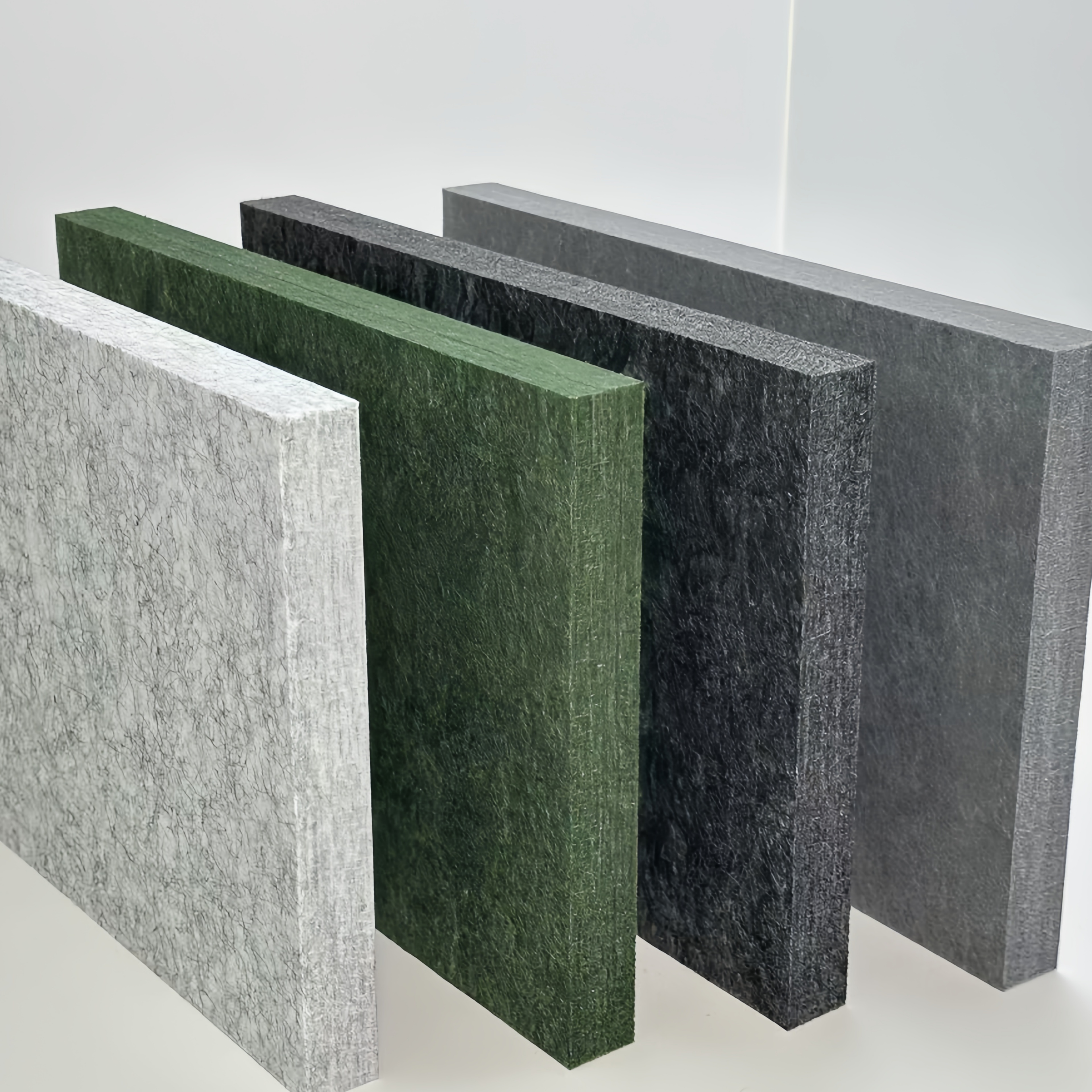
Choosing the right material requires comparing hard data. Visual appeal alone does not guarantee acoustic success. We must compare 24 mm PET acoustic panels directly against their thinner counterparts. This comparison reveals exactly where thicker materials dominate the market.
The Noise Reduction Coefficient (NRC) provides a standardized absorption rating. An NRC of 0.0 means perfect reflection. An NRC of 1.0 means perfect absorption. Thin panels lack the depth to absorb broadband sound effectively. Look at the data carefully. Frequency absorption curves flatten out dramatically at 24mm. They extend deeply into the lower Hertz ranges. This broad-spectrum absorption creates a natural, balanced acoustic environment.
Panel Thickness | Average NRC Rating | Primary Effectiveness Range | Best Application |
|---|---|---|---|
9mm | 0.30 - 0.45 | 1000 Hz and above | Basic echo reduction, high-pitch chatter |
12mm | 0.45 - 0.60 | 800 Hz and above | Meeting rooms, standard offices |
24mm | 0.70 - 0.85+ | 250 Hz and above | Open plans, HVAC noise, auditoriums |
Thickness dictates structural integrity. 9mm and 12mm products remain quite flexible. They are best suited for direct-to-wall applications or small desk dividers. Specifiers often use them for budget-conscious cosmetic upgrades. They wrap easily around curves but sag if suspended without support.
Conversely, 24mm panels offer massive structural rigidity. You need this rigidity for modern ceiling designs. Large unsupported ceiling baffles require stiff materials to maintain straight lines over time. Suspended acoustic clouds demand structural stability to prevent bowing. Furthermore, designers love adding robust V-groove architectural cuts to panels. Thinner felt loses structural integrity when cut deeply. A 24mm panel allows for deep, aggressive CNC routing without compromising panel strength.
Material costs inevitably rise when you double the thickness. A thick PET felt panel costs more per square meter than a standard 12mm sheet. However, you must analyze the broader installation footprint. Upgrading to a 24mm thickness drastically reduces the required surface coverage. You can achieve your target RT60 using fewer panels. This reduces labor costs. It reduces shipping volumes. It frees up wall space for other architectural elements. When you evaluate the total project economics, thicker panels often deliver a superior return on investment.
You cannot blindly purchase thick felt and expect success. Commercial environments demand rigorous material standards. You must evaluate any proposed commercial acoustic treatment through three strict lenses. Neglecting these criteria can lead to failed inspections or unsafe environments.
Commercial building codes strictly regulate interior finishes. You must ensure absolute fire safety. Any shortlisted 24mm panel must provide verifiable testing documentation. In the United States, demand an ASTM E84 Class A rating. In Europe, require the EN 13501-1 Class B certification. These tests prove the material resists flame spread and limits smoke development. Specifiers must remain highly vigilant. We strongly warn against uncertified white-label imports. Many cheap options use highly flammable binders. Installing uncertified panels exposes the property owner to massive legal liability.
Thickness alone does not guarantee performance. Density plays an equally critical role in sound absorption. Manufacturers measure density in kilograms per cubic meter (kg/m³) or grams per square meter (gsm). A quality 24mm panel typically weighs around 3000 to 3500 gsm. The fibers must be tightly packed. A loosely packed 24mm panel contains too much empty air. It will easily underperform a dense 12mm panel. Always request density specifications before finalizing your purchase. Physically inspect samples. They should feel incredibly firm to the touch.
Modern building standards prioritize human health. Poorly manufactured panels often release Volatile Organic Compounds (VOCs) into the indoor air. This off-gassing causes headaches and respiratory irritation. You must prioritize materials carrying trusted eco-certifications. Look for OEKO-TEX Standard 100, SCS Global, or GREENGUARD Gold marks. These independent certifications guarantee the material remains free from harmful chemicals. Specifying certified products directly contributes to LEED and WELL building standard points. Furthermore, quality PET felt consists entirely of recycled plastic water bottles. This closed-loop recycling process drastically reduces the carbon footprint of your project.
Proper installation maximizes acoustic performance. You waste potential absorption if you mount thick panels incorrectly. We need to explore the mechanical realities of deploying these robust solutions on site.
How you mount the panel matters just as much as panel thickness. Pinning a panel flat against drywall limits its low-frequency capabilities. You can exponentially increase low-frequency absorption by introducing an air cavity behind the panel. Acoustic physics dictates this behavior. The sound wave passes through the panel, travels through the air gap, bounces off the hard wall, and passes through the panel again. Installing a 24mm panel with a 50mm to 150mm air gap traps incredibly stubborn bass frequencies. Ceiling baffles inherently utilize this air-gap multiplier. They hang vertically, exposing both sides of the panel to sound waves while maintaining massive air volume between units.
Specifiers often ask how many panels they need. You should avoid over-promising results from a single decorative panel. We rely on a conservative heuristic to guarantee results. Follow this structured approach to coverage:
Calculate total room surface area: Add the square footage of the floor, ceiling, and all four walls.
Determine the baseline percentage: Lightly reverberant rooms need about 15% coverage.
Adjust for high-noise spaces: Open offices or concrete cafes require 20% to 25% coverage.
Allocate the materials: Distribute the calculated square footage across the ceiling and primary reflection walls.
Following this simple matrix prevents under-specifying materials. It ensures your client experiences a dramatic, noticeable improvement in sound quality immediately after installation.
Thick panels introduce unique installation risks. They weigh significantly more than 9mm sheets. You must evaluate ceiling grid load capacities before hanging dense acoustic clouds. Standard suspended grid systems might require additional wire ties. Furthermore, cutting 24mm panels requires specialized tools. A standard utility knife struggles to cut cleanly through dense 3000gsm felt. On-site contractors need heavy-duty track saws or specialized cutting blades to avoid jagged edges. Finally, suspended baffles require robust, adjustable hardware. Cheap mounting cables will stretch or fail under the continuous weight.
The procurement phase requires strategic thinking. You must match the specific product to the exact acoustic challenge. Purchasing an inadequate sound absorption panel wastes valuable time and budget.
You can streamline your specification process using a rapid decision matrix. Let the actual noise source dictate your material thickness.
If mitigating server room drone or heavy HVAC noise, specify 24mm.
If outfitting a vast, high-ceiling food hall, specify 24mm suspended baffles.
If mitigating high-pitch chatter in a small call center, 12mm remains sufficient.
If adding aesthetic desk privacy screens, 9mm provides enough visual and acoustic separation.
You must hold your suppliers to high standards. Never accept broad marketing claims. Professional specifiers demand hard data. First, request custom cut sheets detailing exact dimensions and tolerances. Second, demand verifiable acoustic testing reports from independent laboratories. These reports validate the stated NRC ratings. Third, always request physical samples. You need to verify the density and structural rigidity in person. If a vendor hesitates to provide independent lab reports, eliminate them from your shortlist.
Do not ignore the realities of B2B procurement. Shipping bulky materials requires careful planning. A pallet of 24mm sheets takes up twice the freight volume of thinner alternatives. This increased volume directly impacts shipping costs and delivery timelines. You must coordinate logistics early in the project timeline. Ensure the job site has adequate dry storage space. PET felt absorbs ambient moisture if left in damp, unconditioned environments prior to installation.
Move from research to action. We encourage you to request a comprehensive specification binder from your chosen manufacturer. Ask for CAD and BIM files to seamlessly integrate the panels into your architectural drawings. Request large physical samples to validate texture, rigidity, and color fastness under actual site lighting. Taking these active steps ensures a flawless transition from design to reality.
Specifying 24mm panels is an acoustic necessity for specific frequency challenges, not just a mere aesthetic upgrade. Modern architecture demands solutions capable of trapping harsh low-to-mid frequencies. Relying on thin materials in high-volume spaces guarantees failure. We strongly advise trusting verifiable acoustic laboratory data over broad marketing claims. Always verify NRC curves and density metrics before approving a purchase order. Protect your client's investment by insisting on strict fire safety certifications. Finally, we recommend consulting directly with an acoustic engineer or the manufacturer's technical team. Let them run accurate RT60 modeling prior to mass procurement. This step ensures your final design sounds exactly as good as it looks.
A: No. You must understand the difference between sound absorption (NRC) and sound transmission loss (STC). PET felt excellently manages internal echo and reverberation. It stops sound from bouncing around inside the room. It does not provide external soundproofing. It will not stop traffic noise from coming through a wall.
A: Yes, contractors can cut them on-site. However, the extreme density requires heavy-duty utility knives or plunge track saws. Manual cutting often leaves uneven edges. We highly recommend ordering factory CNC routing for perfectly clean commercial edges.
A: Quality panels pose no danger. Manufacturers create them by heat-pressing recycled plastic bottles without using toxic chemical binders. They are inherently flame retardant. However, you must explicitly demand panels carrying verified Class A (ASTM E84) or Class B (EN 13501-1) fire certifications.
A: No. Covering 15% to 25% of the room's total surface area usually achieves excellent results. You should utilize strategic placement directly over primary noise sources. Utilizing a vertical "baffle" or suspended "cloud" layout maximizes absorption efficiency while reducing total material costs.