
Views: 0 Author: Site Editor Publish Time: 2026-10-28 Origin: Site


Modern open-concept architecture is visually stunning. Yet it often harbors a hidden flaw. We are talking about terrible acoustics. Minimalist interiors, exposed concrete, glass partitions, and hardwood floors create highly reflective environments. These hard surfaces look fantastic. However, they bounce sound waves endlessly across a room. This results in a chaotic buildup of echoes and background noise.
To solve this modern design dilemma, architectural engineers and interior designers have turned to a highly efficient acoustic substrate. Over the last decade, PET felt acoustic panels have quietly taken over the commercial and residential design world. You will find this innovative material everywhere. It spans from high-end corporate boardrooms to bustling boutique cafes.
This comprehensive guide explores the exact engineering behind this material. We will break down its composition, acoustic science, practical benefits, and the reasons why top industry professionals are making a permanent switch.
Eco-Friendly Innovation: Manufactured primarily from recycled plastic bottles. This provides a highly sustainable choice contributing to green building certifications like LEED.
Superior Sound Absorption: The dense and porous nature of the fibers effectively traps high and mid-frequency sound waves. This drastically reduces reverberation in open spaces.
Design Versatility: Available in numerous colors and custom shapes. It integrates beautifully with other architectural elements like natural wood slats.
Cost-Effective Durability: Offers a longer physical lifespan and significantly lower long-term maintenance costs compared to traditional acoustic treatments.
To truly understand why this material has become a staple in architectural acoustics, we must first examine its composition. PET stands for Polyethylene Terephthalate. It is the exact same highly durable plastic polymer used to manufacture everyday clear water bottles. Instead of allowing these single-use plastics to accumulate in landfills, the acoustic design industry ingeniously repurposes them into premium interior finishes.
The manufacturing process is a rigorous engineering journey. First, post-consumer plastic bottles are collected and thoroughly sterilized. They are then mechanically shredded into tiny uniform flakes. These flakes are subsequently heated, melted down, and extruded into incredibly fine soft fibers.
Once the fibers are created, they undergo a specialized needle-punching and thermal bonding process. Layers of fibers are compressed under intense heat. This fuses the material together without requiring any toxic chemical glues or synthetic binders. The final result is a sturdy rigid board. It maintains structural integrity while remaining porous enough to manage sound.
Appreciating the functional value of this material requires looking at the basic science of sound. When sound waves are generated in a room, they travel outward and strike surrounding surfaces. Hard materials reflect these waves back into the space. This continuous reflection causes reverberation. It makes hearing difficult and increases overall stress levels.
This is where the unique physical structure of the felt intervenes. The material features a porous non-woven matrix of compressed fibers. When sound waves hit high-quality 9mm PET felt acoustic panels, they do not bounce off. Instead, the waves penetrate the surface. They navigate through the microscopic air pockets between the fibers. As the acoustic energy travels through this dense maze, it creates friction. This friction converts the sound energy into a microscopic amount of thermal energy. The noise is effectively deadened.
Acoustic performance is measured using the Noise Reduction Coefficient, a scale from 0 to 1.0. Standard panels typically offer baseline ratings between 0.30 and 0.45 when mounted flush against a wall. However, mounting them with a calculated air gap behind the substrate changes everything. The rating can jump significantly, often reaching between 0.70 and 0.95. This makes the material exceptionally effective at absorbing the mid-to-high frequency ranges typical of human speech.
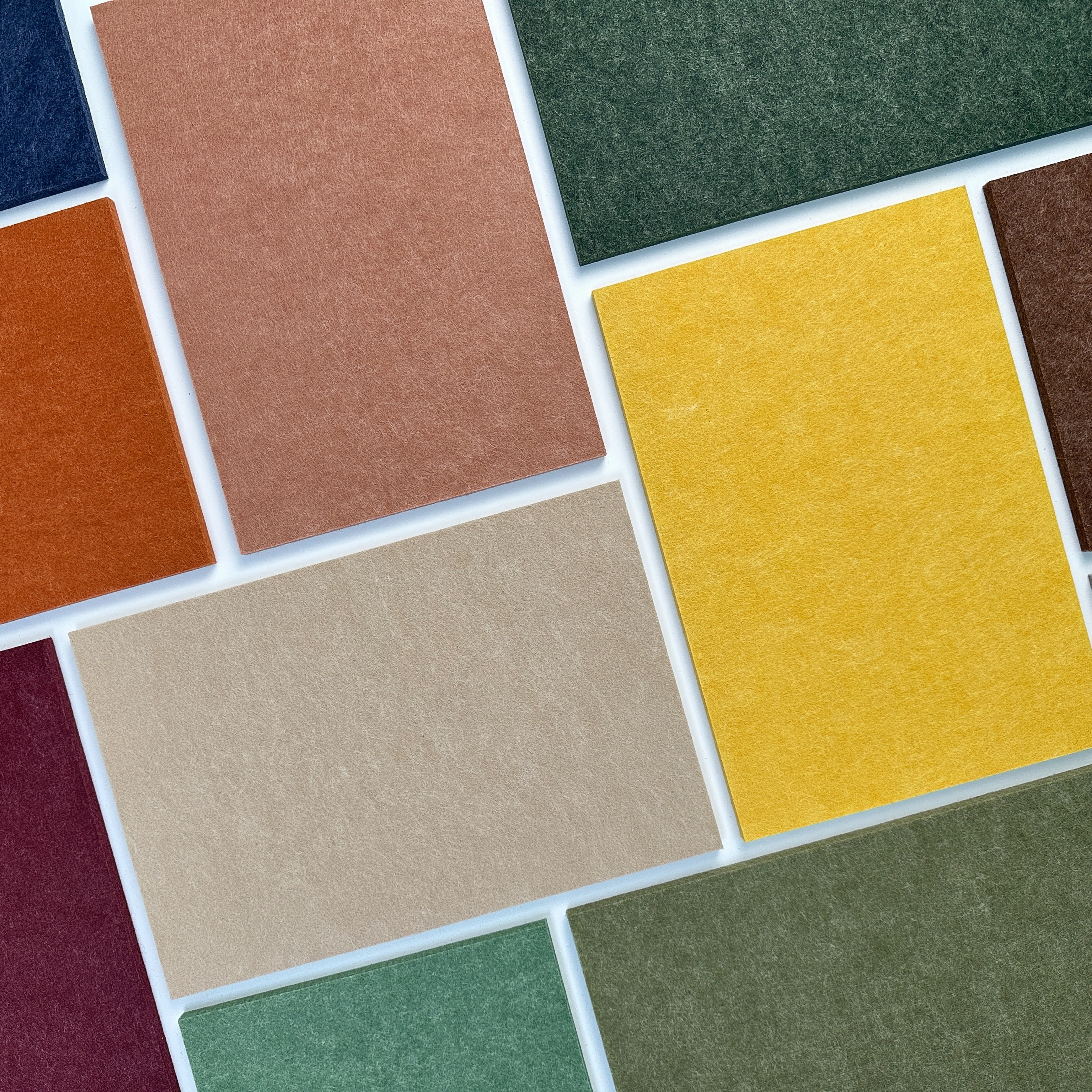
Transitioning from acoustic theory to practical application means looking at hard data. As an acoustic engineer, selecting the right substrate is critical for project success. Let us look at the standard specifications that make this material a top choice for commercial builds.
Typically, a premium acoustic panel comes in standard dimensions of 1220mm by 2440mm. The 9mm thickness is widely considered the optimal sweet spot for interior applications. It provides enough structural rigidity to stand alone as a desk divider while remaining lightweight enough for effortless installation.
Material Type | Density & Thickness | NRC Rating | Durability & Maintenance | VOC Emissions |
|---|---|---|---|---|
PET Felt Panels | 9mm / Approx. 1300g-1900g per sqm | 0.85 - 0.95 with air gap | High. Impact resistant, washable | Zero |
Acoustic Foam | 25mm - 50mm | 0.60 - 0.80 | Low. Crumbles over time | Trace amounts possible |
Fiberglass Wrapped | 25mm+ | 0.80 - 1.0 | Medium. Fabric can tear | Low but requires encapsulation |
This direct comparison highlights the commercial value. You get comparable or superior sound absorption without the degradation issues of foam or the handling hazards of fiberglass.
One of the primary reasons facility managers select this material is its physical resilience. Picture a high-traffic corporate hallway or a busy school corridor. Traditional acoustic foam can become brittle. It may crumble or discolor over time due to UV exposure or physical contact. In contrast, compressed polyester fibers retain their structural integrity for decades. They are inherently impact-resistant. They will not dent or shatter if bumped by furniture or personnel. Furthermore, the non-porous nature of the individual plastic fibers means they resist liquid absorption. This allows for easy spot-cleaning with a damp cloth.
Structural load is a critical consideration in commercial architecture. These panels are exceptionally lightweight. They typically weigh only a fraction of what wood or heavy fabric-wrapped fiberglass panels weigh. This low mass eliminates the need for heavy-duty structural backing or complex mounting hardware. Installers can easily mount them using standard construction adhesives, screws, or suspended cable systems. Consequently, this drastically reduces shipping costs and minimizes the labor hours required for large-scale installations.
Indoor air quality has become a non-negotiable priority in modern building design. High-quality polyester felt is non-toxic and hypoallergenic. It does not shed irritating particulate matter into the air. Because the manufacturing process relies on heat rather than chemical adhesives to bind the fibers, the final product emits zero Volatile Organic Compounds. This ensures a healthier indoor environment. It is an appropriate choice for sensitive spaces such as healthcare facilities, schools, and residential interiors.
The shift toward polyester-based acoustic materials represents a structural evolution within commercial architecture. Recent industry analysis shows a massive movement toward "invisible acoustics." Today's interior spaces demand multifunctional materials where sound treatment is indistinguishable from the architectural decor itself.
Large-scale architectural firms require materials that offer strict supply chain consistency. Traditional materials like wood or natural fibers vary wildly in density and moisture content from batch to batch. By utilizing recycled plastics, manufacturers tap into a massive and stable supply chain. The automated thermo-compression process ensures that every sound absorbing felt panel produced has the exact same density, weight, and acoustic profile. This allows project engineers to specify the material with absolute confidence.
Strict green building mandates are pushing out legacy materials. The drive for sustainability means materials must contribute to a circular economy. Repurposing plastic waste into high-performance architectural elements perfectly aligns with global environmental goals.
Modern architectural design demands materials that do not force a compromise between form and function. Historically, acoustic treatments were viewed as a visual sacrifice. Today, the inherent physical properties of polyester fibers allow manufacturers to produce solutions that serve as primary design elements.
One prominent movement is the integration of natural wood elements with sound-absorbing backings. Designers frequently use a solid felt backing overlaid with vertical wooden slats. The rigid wooden slats act as diffusers. They scatter high-frequency sound waves. Meanwhile, the porous felt backing operates as a broadband absorber. This dual-action mechanism provides spaces with both visual warmth and precise reverberation control.
Unlike woven fabrics, polyester felt is a structurally stable non-woven material. It does not fray when cut. This eliminates the need for edge banding. Designers utilize CNC routing technology to precision-cut intricate geometric patterns or complex three-dimensional architectural baffles directly into the panel surface.
The combination of aesthetic appeal, durability, and acoustic efficiency allows these materials to be deployed across a vast array of settings.
In corporate environments, the widespread adoption of open-concept office layouts has led to significant challenges regarding speech privacy. Acoustic felt is frequently utilized as suspended ceiling baffles, freestanding desk dividers, and full-wall treatments. By capturing excess conversational noise, these panels help create a more productive work environment.
Hospitality venues also benefit greatly. Imagine a bustling modern restaurant with concrete floors and large glass windows. These spaces often suffer from the Lombard effect. Patrons subconsciously raise their voices to be heard over background noise. To mitigate dining room clamor without disrupting the aesthetic, hospitality venues discreetly integrate acoustic felt into ceiling clouds or under-table mountings.
PET felt acoustic panels have fundamentally changed how we approach interior design. They successfully bridge the gap between environmental sustainability, high-performance sound management, and modern aesthetics.
As open-concept spaces continue to dominate architectural trends, the need for effective and visually pleasing sound dampening will only grow. This material is clearly a permanent fixture in the future of commercial and residential building.
Architects, interior designers, and workspace managers looking to elevate both the visual appeal and overall acoustic comfort of their next project need reliable solutions. For precise acoustic control and premium aesthetic finishes, explore the comprehensive range of eco-friendly PET acoustic panels at YH Acoustic. Upgrading your space with engineered sound management has never been more accessible or stylish.
Yes, high-quality polyester acoustic panels are engineered to meet strict commercial fire safety standards. Reputable manufacturers ensure their products achieve an ASTM E84 Class A rating in North America or an EN 13501-1 B-s1, d0 classification in Europe. These ratings indicate a low flame spread index and minimal smoke development. Always review the official testing certificates from the manufacturer before specifying them for commercial environments.
Yes. Polyester is inherently hydrophobic, meaning it does not absorb water. Unlike organic materials such as cotton, wool, or standard MDF, polyester felt will not warp, swell, or degrade when exposed to high humidity. Because it does not retain moisture, it does not provide a food source for microbial growth, making it highly resistant to mold and mildew.
Maintenance is highly straightforward. Because the material does not generate dust or shed fibers, routine upkeep typically only requires light dusting or vacuuming using a soft brush attachment to remove surface debris. For localized stains, you can spot-clean the panels using a clean cloth and a mild soap-and-water solution. Avoid harsh chemical solvents or bleach, as they can alter the surface texture.
Yes, thickness directly impacts acoustic absorption capabilities, particularly at lower frequencies. Thicker panels possess more mass and depth, allowing them to trap longer, low-frequency sound waves more effectively when mounted flush against a wall. However, a standard 9mm panel can achieve comparable broad-spectrum absorption if installed with a calculated air gap between the panel and the wall substrate. This makes it a highly cost-effective solution for typical speech frequencies.
These panels offer exceptional longevity compared to traditional foam alternatives. Because they are made from highly durable compressed polyester fibers, they resist physical impacts, UV degradation, and temperature fluctuations. In a standard commercial or residential environment, they can easily maintain their structural integrity and acoustic performance for 10 to 15 years or more without needing replacement.
Absolutely. The manufacturing process uses thermal bonding rather than chemical adhesives to fuse the fibers together. This means the panels emit zero Volatile Organic Compounds. They are non-toxic, hypoallergenic, and do not release any irritating airborne particulates over time, making them completely safe for schools, hospitals, and homes.